
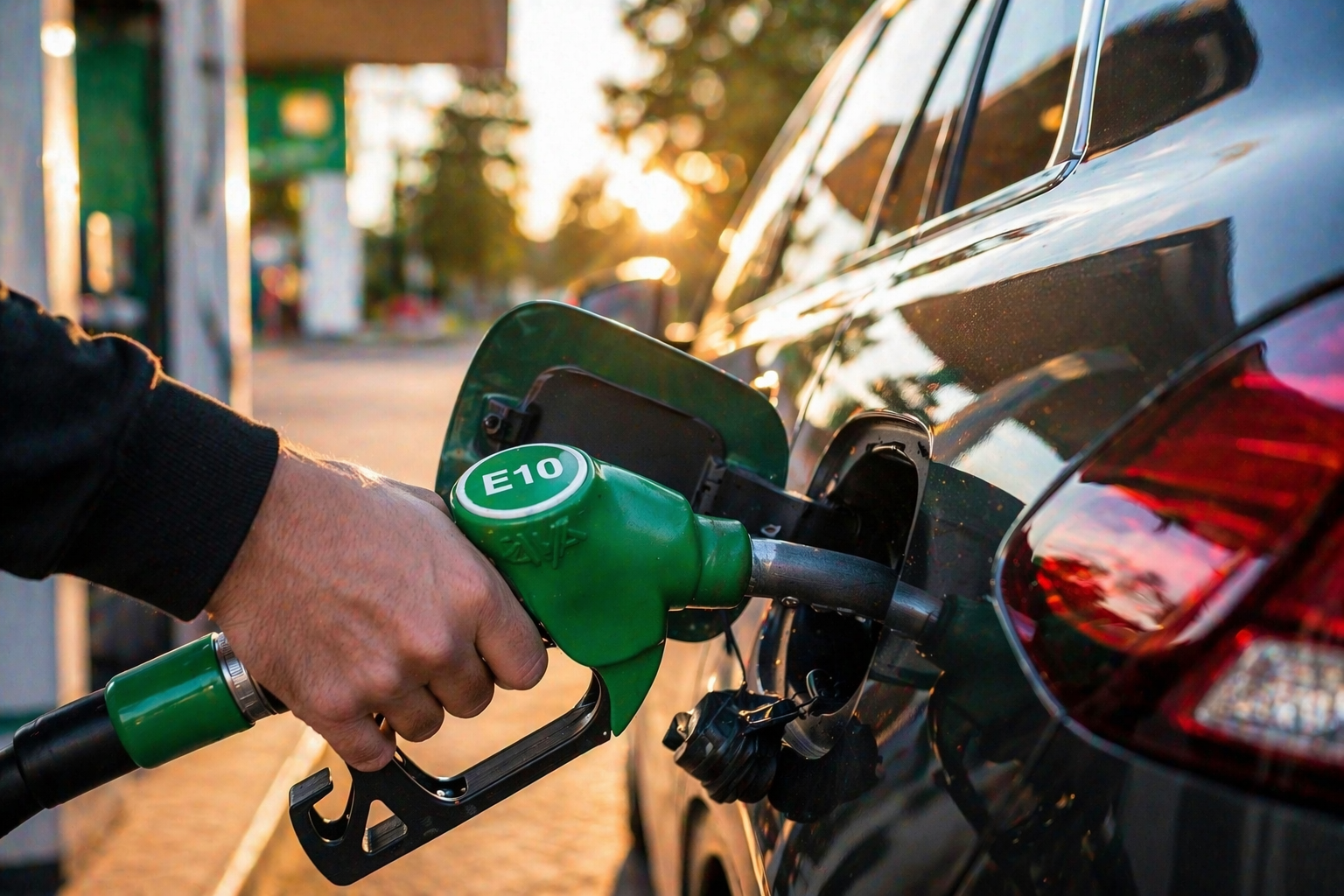
E5 petrol to E10 questions answered

Share
With the recent news of E5 petrol being replaced with E10 leaving many motorists confused, experts explain what it actually means and how it affects those with older cars.
The motoring experts at LeaseCar.uk have simplified what this change means for motorists and the environment along with what car owners can do if their car isn’t compatible with the new petrol grade standard.

A spokesperson from LeaseCar.uk said: “Drivers should be aware of this change and what it means, but sometimes we get given so much information that it actually confuses us further. That’s why we wanted to break down in the simplest of terms what this change to E10 petrol actually means.
“It’s important to get one thing clear, if you own a diesel vehicle you won’t have to worry about this. E5 and E10 are types of petrol so this won’t affect your car.
“In the long run it is much better for our environment and a lot of countries have already made that switch like Germany and France.”
What is the difference between E5 and E10 petrol?
The current petrol grade is E5 which is made up of 95% regular unleaded petrol and 5% renewable ethanol (hence the name).
Tim Alcock from LeaseCar.uk says “E10 will be much more beneficial to the environment as it will contain 10% ethanol and 90% of regular unleaded petrol. Essentially this will cut down the CO2 transmissions from our vehicles.”
What do you do if your car is too old?
Cars which are manufactured from 2011 onwards will be able to take the new E10 petrol grade.
“If you’re unsure whether or not your car is compatible, the government has created a section on their website where you can check if E10 is suitable for your car,” says Tim.
Cars manufactured will be able to use E5 petrol at most petrol stations by purchasing the ‘super’ grade petrol which will be more expensive.
Tim says: “If your car is not compatible, there will still be E5 petrol available to use, it will just be more expensive.”
What happens if you fill your car with the wrong kind of petrol?
Tim said: “Drivers should also take care when filling up their cars to avoid putting in the wrong petrol. If you do accidentally put E10 in your car which is only compatible with E5, don’t worry too much.
“Just wait until there is room to add more petrol in and fill it with the correct one.
“This isn’t as bad as filling a petrol car with diesel, you won’t have to get the car drained out but you should still take care and pay attention to what you are filling your car up with because it can cause long term damage.”
Related articles
 Press releases
29 September 2022
Watch the windows: Eight things which could null your car insurance
Jake Crowley
 Press releases
28 September 2022
Top tips for driving on smart motorwaysJake Crowley
 Press releases
28 September 2022
Top five tips to steer clear of potholes – with extra roads maintenance cash pledgedJake Crowley
 Press releases
28 September 2022
Top eight tips for when you’re in a car crashJake Crowley
 Press releases
28 September 2022
Century-old car tax discs for sale – could you be sitting on a fortune?
Tim Alcock
 Press releases
28 September 2022
How to navigate the UK’s narrowest lanesTim Alcock
 Press releases
18 November 2020
Eight caravan towing tipsTim Alcock
 Press releases
18 November 2020
Driving rules we were told as kids: fact or fiction?Tim Alcock
 Press releases
18 November 2020
Seven steps to change a wheelJake Crowley
29 September 2022
Jake Crowley
28 September 2022
Jake Crowley
28 September 2022
Jake Crowley
28 September 2022
Jake Crowley
28 September 2022
Tim Alcock
28 September 2022
Tim Alcock
18 November 2020
Tim Alcock
18 November 2020
Tim Alcock
18 November 2020
Jake Crowley