
What to do if you aquaplane

Share
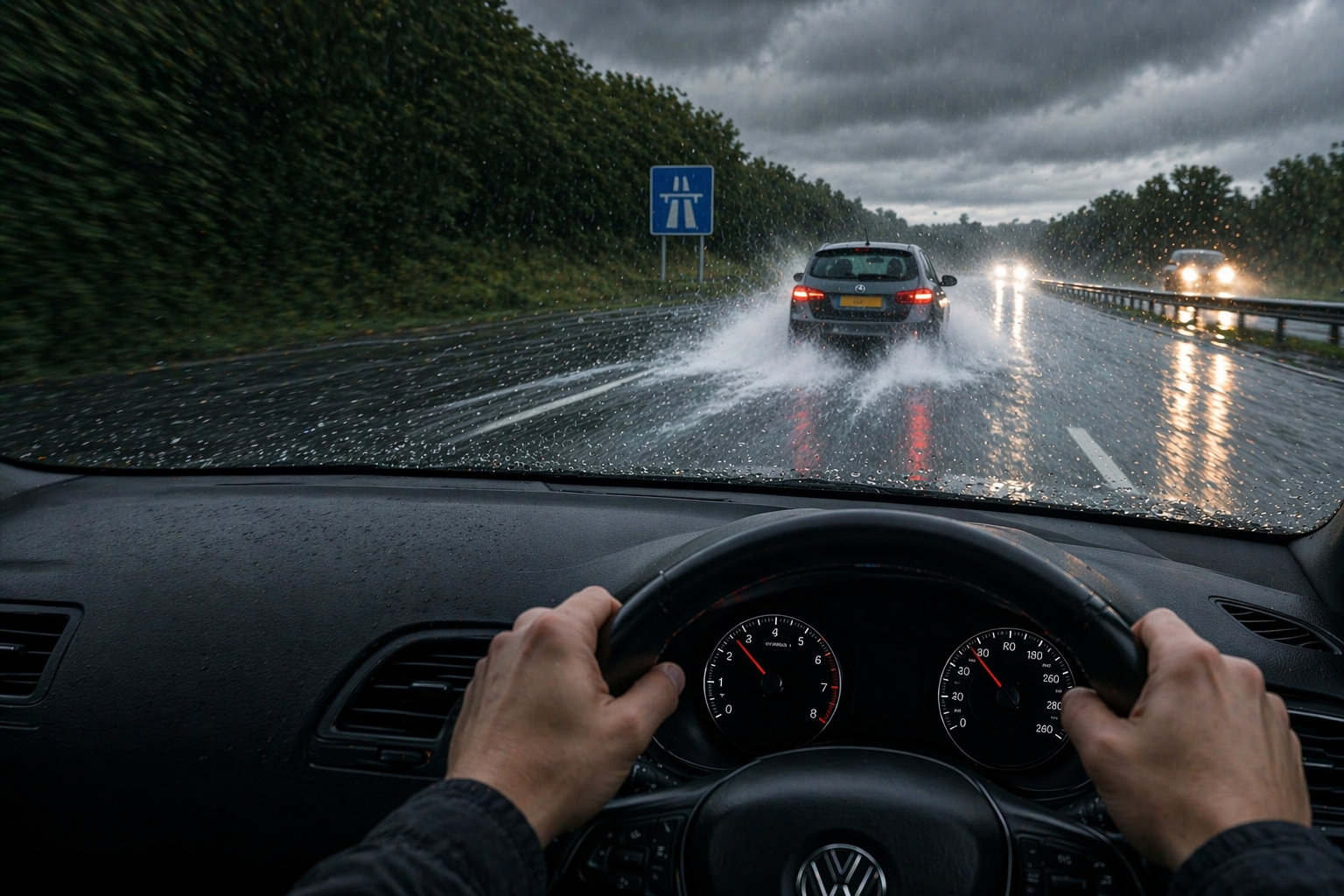
Drivers have been offered important advice on what to do if they find their vehicle aquaplaning on wet roads.
Driving experts from LeaseCar.uk are encouraging road users to be more careful and ensure tyres are of the best condition, especially when driving in the rain.
Aquaplaning is caused by surface water and rainfall on the road, causing tyres to lose grip on the tarmac.
This causes the car to skid, meaning drivers lose control and cannot steer – similar to when a vehicle hits ice.
A spokesperson for LeaseCar.uk said: “Aquaplaning can be a scary experience and is quite common, but there are precautions drivers can take to prevent it from happening.
“Ensuring tyres are in good condition, driving within the speed limit and with caution in wet conditions will all help reduce the risk of aquaplaning.
“Following the tracks made by the car in front of you – but ensuring you are a safe distance away – will also make it easier for tyres to find grip.
“Wet roads will also exacerbate other dangerous conditions such as spilt oil or wet mud, so it’s important to take extra care.”
Brakes
Don’t hit the brakes too hard as this will mean you have no chance of tyres finding grip again on the road. It was also increase the likelihood of you skidding further than necessary. Let the speed of the vehicle fall slowly as you find control before you then touch the accelerator to speed up again.
Accelerator
Gently ease your foot off the gas, and as you slow down you should be able to feel the car gaining traction again. Trying to accelerate out of the aquaplane is a recipe for disaster, with the vehicle trying to work in overdrive meaning it cannot concentrate on slowing down and finding grip again.
Steering wheel
Hold the steering wheel steady and straight – don’t make any quick, jerky movements. As you feel the vehicle finding traction again, this is when you can make slow movements to steer yourself back onto the right side of the road or where you should be.
Cruise control
Travelling with cruise control turned on in wet conditions can be dangerous as the systems sensors can be affected by moisture, meaning they aren’t as effective. As soon as you notice the car aquaplaning you should turn cruise control off if you have it on – but do it via the button on your dashboard as opposed to breaking.
Speed
As you regain control of the vehicle you should bring your speed right down. This gives the vehicle time to reset itself and for you to control the vehicle before anything dangerous happens. Once you are fully back in control you can then speed up to match the flow of the traffic, but ensure it isn’t too quick so that you don’t aquaplane again.
Related articles
 General
30 March 2026
The Lexus GX tops the 10 most-wanted luxury cars in the world
Jake Crowley
 General
21 October 2024
Inflation on the road – How has cost ownership changed in the last decade?
Tim Alcock
 General
8 December 2023
How to drive safely in winter conditions - Leasecar BlogTim Alcock
 General
15 October 2023
5 Reasons Leasing A Car Is Better Than Buying One OutrightTim Alcock
 General
28 September 2022
Bomb disposal and mountain rescue: Just who can use a blue light on UK roads?Tim Alcock
 General
27 March 2020
Famous fictional carsTim Alcock
 General
6 February 2020
Six confusing things on Britain’s roadsJake Crowley
 General
6 February 2020
Ten Silliest Car AccessoriesJake Crowley
 General
30 November 2018
A Guide for Driving for WorkTim Alcock
30 March 2026
Jake Crowley
21 October 2024
Tim Alcock
8 December 2023
Tim Alcock
15 October 2023
Tim Alcock
28 September 2022
Tim Alcock
27 March 2020
Tim Alcock
6 February 2020
Jake Crowley
6 February 2020
Jake Crowley
30 November 2018
Tim Alcock